
Sandison field note
Planning Radon Mitigation During a Michigan Real-Estate Transaction
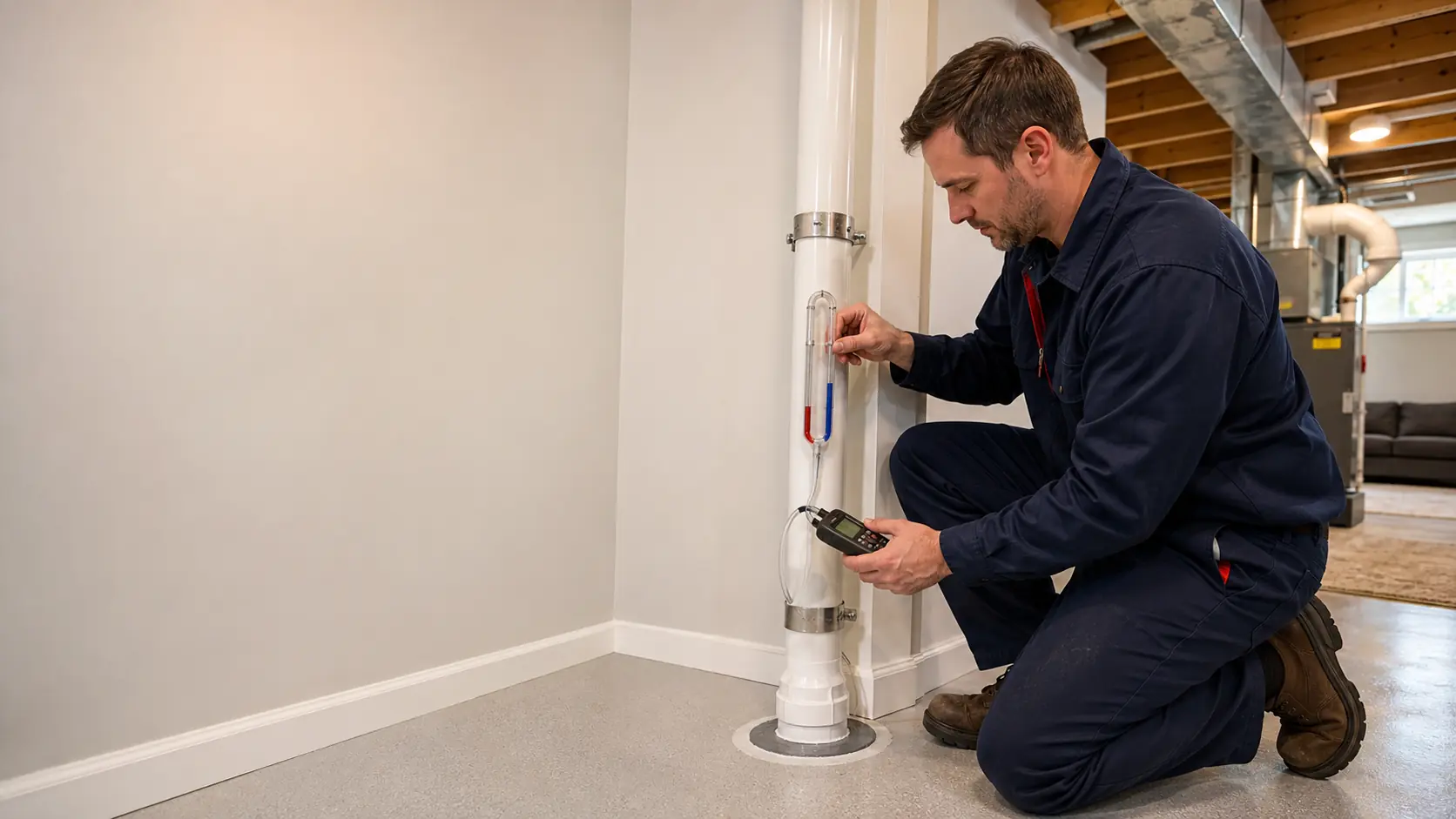
A closing deadline should not reduce radon mitigation to a checkbox. Test validity, the foundation, suction zones, fan and discharge location, power, condensate, access, documentation, and post-mitigation testing still determine whether the system is properly planned and verified.
The short answer
Start with the complete system and the evidence
Buyers, sellers, real-estate professionals, inspectors, and contractors may all be working against the same date, but they do not hold the same responsibility. The transaction should identify the test record, access authority, proposed system, installation scope, electrical and building-system coordination, retest plan, documents required by the parties, and the person responsible for each decision.
What Sandison evaluates
A practical path from symptoms to the right scope
- Confirm the test record, access permission, and transaction timeline
- Design around the actual foundation, suction zones, and occupied spaces
- Coordinate fan power, routing, drainage, and penetrations before work
- Plan post-mitigation testing and transfer the system documentation
Primary references
Verify the local and credential information.
Common questions
What property owners ask
Should a radon mitigation system be tested after installation?
Yes. Post-mitigation testing verifies the measured radon level after the system is operating. Follow the test-device and qualified-professional instructions for timing and closed-building conditions.
Can radon mitigation require electrical or plumbing coordination?
It can. Fan power, routing, condensate, sump conditions, and foundation penetrations can cross trade boundaries, which is why the complete system should be reviewed before installation.
Evidence and review
Why this page can be trusted
Original Sandison field article with a primary technical reference, named author and qualified trade review, explicit safety and scope limits, and a separate evergreen decision-guide path.
Author and qualified trade reviewer: James Sandison, B.S. Mechanical Engineering, Oakland University. Michigan Mechanical License 7115733 · Michigan Master Plumber 8112263 · Michigan Plumbing Contractor 800-3618. Last reviewed 2026-08-29.