
Sandison field note
Why a Sewer Backup Keeps Coming Back
When a sewer line backs up again after cleaning, the next useful step is evidence that distinguishes recurring buildup from roots, a separated joint, damaged pipe, poor slope, a belly, or a downstream restriction.
The short answer
Start with the complete system and the evidence
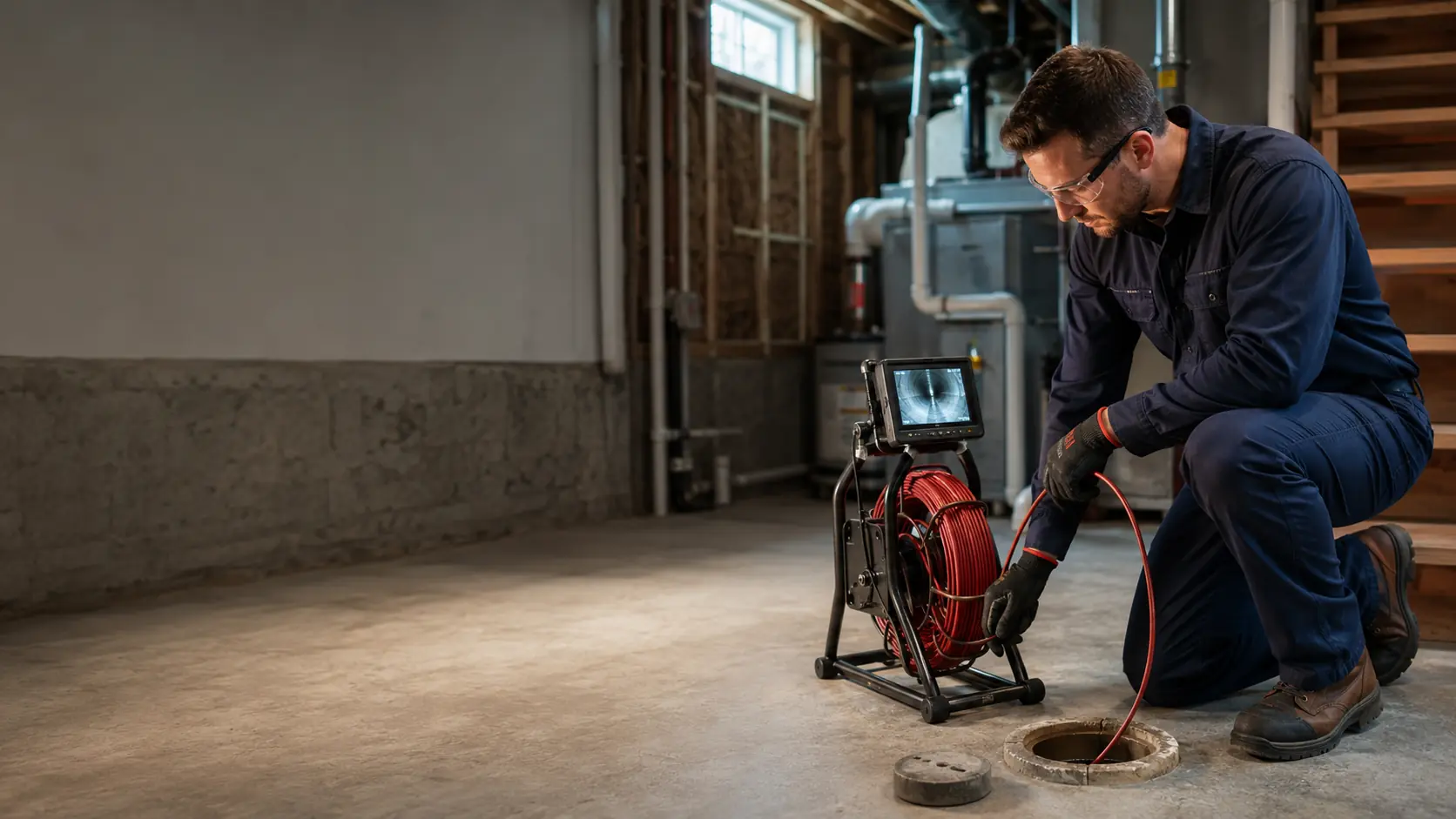
Cleaning can restore flow without explaining why the restriction formed or whether the pipe can remain dependable. The affected fixtures, recurrence interval, weather relationship, pipe material, cleanout access, cleaning response, camera travel, defect location, and public-side conditions all help determine whether the next step is maintenance, targeted repair, broader rehabilitation, excavation, or utility coordination.
What Sandison evaluates
A practical path from symptoms to the right scope
- Restore enough flow and cleanliness to create a useful camera view
- Record the defect type, location, pipe material, and visible limits
- Separate recurring deposits from structural pipe conditions
- Match cleaning, spot repair, lining, or replacement to the evidence
Primary references
Verify the local and credential information.
Common questions
What property owners ask
Why can a sewer back up again after it was cleaned?
Cleaning may remove the immediate restriction without correcting roots, a separated joint, a belly, damaged pipe, or a source of recurring buildup. A post-cleaning camera inspection can help identify the cause.
Does every recurring backup require sewer replacement?
No. The correct scope depends on the defect, its location, pipe condition, access, affected length, and how the line responds to cleaning. Evidence should determine whether maintenance, a localized repair, rehabilitation, or replacement is justified.
Evidence and review
Why this page can be trusted
Original Sandison field article with a primary technical reference, named author and qualified trade review, explicit safety and scope limits, and a separate evergreen decision-guide path.
Author and qualified trade reviewer: James Sandison, B.S. Mechanical Engineering, Oakland University. Michigan Mechanical License 7115733 · Michigan Master Plumber 8112263 · Michigan Plumbing Contractor 800-3618. Last reviewed 2026-08-29.