Serving Oakland and Macomb Counties Office hours: Monday–Friday, 8:30 a.m.–4:30 p.m.

The short answer

Start with the complete system and the evidence

Useful guidance should help a property owner ask better questions without pretending that a webpage can diagnose equipment or building conditions. The final scope still depends on on-site evidence.

What Sandison evaluates

A practical path from symptoms to the right scope

  • Immediate safety and damage-control questions
  • Evidence that changes the diagnosis
  • Repair, maintenance, and replacement factors
  • Questions to document before authorizing work

Answer-first field guide

Repair or Replace a Furnace: the factors that materially change the answer

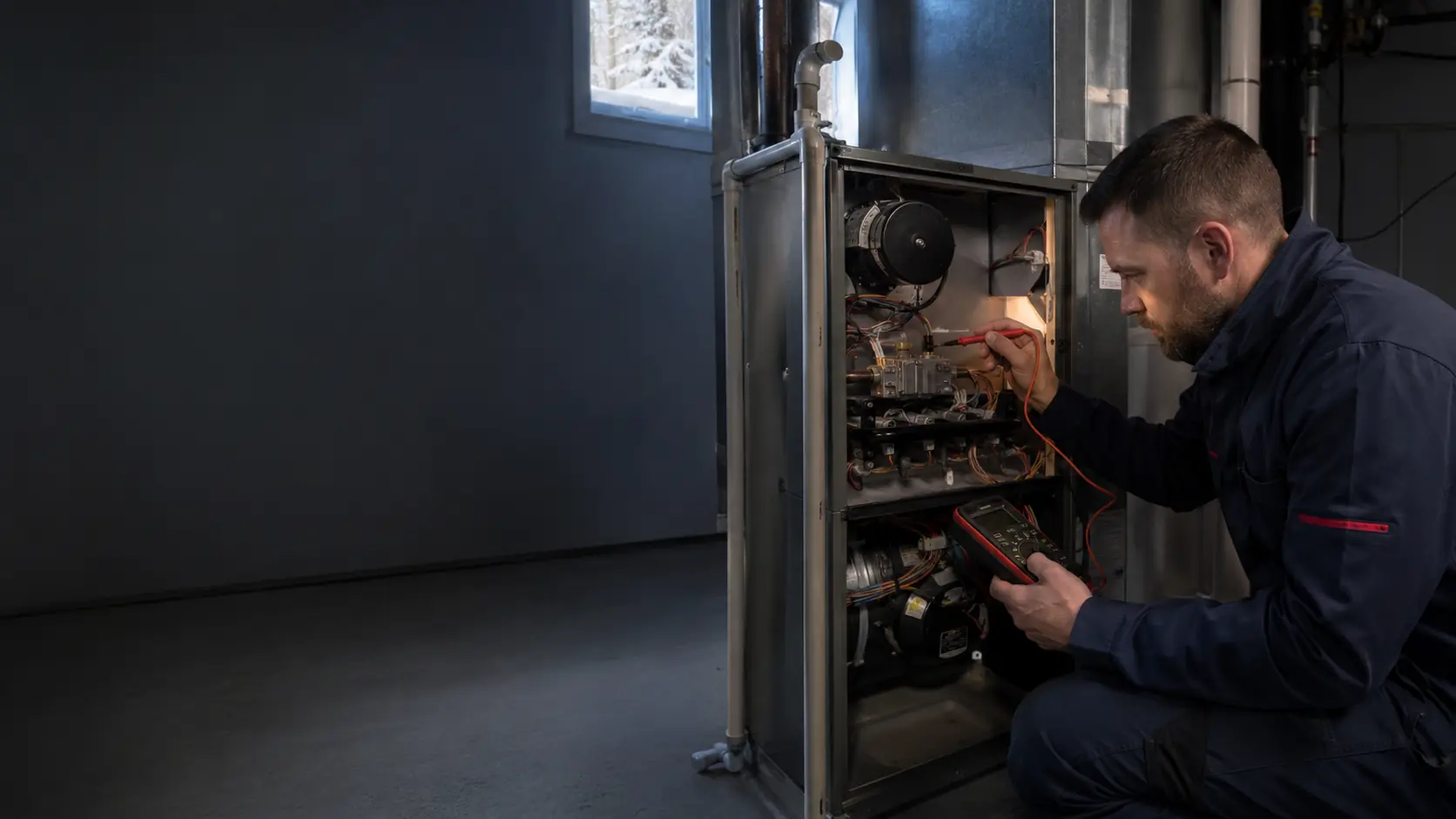
The choice depends on the failed part and safety condition, heat-exchanger and venting evidence, repair history, furnace age, airflow, available parts, operating cost, comfort problems, and whether replacement corrects the distribution system. Heating diagnosis follows the operating sequence through thermostat demand, power, controls, safeties, ignition or heat production, combustion and venting where applicable, blower or hydronic circulation, temperature change, distribution, and the point at which operation stops. A reader can use these checkpoints to organize observations and ask better questions, but should not bypass alarms, manufacturer instructions, permits, or an on-site safety assessment. The guide deliberately separates what a property owner can observe from testing and trade work that requires qualified access.

From information to action

Document the evidence before choosing the repair or replace a furnace path

Useful evidence includes fault history, temperature rise or hydronic delta, static pressure or flow observations, combustion and vent condition as applicable, electrical readings, control sequence, and verified operation after correction. Repair, airflow or hydronic correction, control work, maintenance, and replacement are compared using failure history, safety, measured performance, parts, age, distribution limits, and whether new equipment would inherit the same problem. Record model information, dates, affected rooms or fixtures, operating changes, prior work, photographs that can be taken safely, and the result of any approved testing. Sandison then connects those facts to repair, maintenance, further investigation, replacement, another responsible party, or an emergency response without presenting generalized guidance as a property-specific diagnosis.

Primary references

Verify the local and credential information.

Common questions

What property owners ask

How does Sandison evaluate repair or replace a furnace?

Sandison starts with the symptoms, the property, the connected systems, and observable evidence before recommending repair, replacement, maintenance, or further testing.

Can I request service for repair or replace a furnace online?

Yes. Submit a non-emergency service request for review, or call the office during business hours. For an urgent active failure, call the emergency number directly.

Does Sandison serve both homes and commercial properties?

Yes. Sandison serves homeowners, property managers, businesses, and institutional facilities throughout Oakland and Macomb Counties.

Evidence and review

Why this page can be trusted

Published Sandison decision guide with a primary technical reference, explicit diagnostic limits, and qualified review.

Author and qualified trade reviewer: James Sandison, B.S. Mechanical Engineering, Oakland University. Michigan Mechanical License 7115733 · Michigan Master Plumber 8112263 · Michigan Plumbing Contractor 800-3618. Last reviewed 2026-08-28.

Save$50on service
A welcome from Sandison

Put $50 back in your pocket.

New residential customers can save $50 on a qualifying completed repair or installation.

Offer codeWELCOME50

Licensed multi-trade service · Office-confirmed scheduling

New residential customers only. One offer per household. Cannot be combined with another offer. Not valid for dispatch or diagnostic fees, maintenance plans, permits, or after-hours emergency service. Qualifying work and final eligibility are confirmed before service.