Sandison evaluates radon mitigation needs in Birmingham around the property, connected systems, safety, service access, and evidence—not a one-size-fits-all recommendation.
Birmingham includes historic homes, high-end renovations, compact equipment spaces, and exacting comfort expectations. For radon mitigation, the work can involve foundation zones, suction points, fan and discharge placement, electrical supply, and post-mitigation testing. The diagnostic path is adjusted to those conditions and to what is actually observed on site.
What Sandison evaluates
A practical path from symptoms to the right scope
Evaluate the complete radon mitigation system
Account for Birmingham property conditions and access
Explain evidence, options, and connected trade requirements
Document the recommended next step before work proceeds
Local system context
A Birmingham address is context—not a substitute for radon mitigation evidence
Birmingham properties often pair older construction and compact utility routes with renovated kitchens, bathrooms, finished spaces, specialty fixtures, and higher comfort expectations. For radon mitigation, Radon planning reviews the test result and protocol, foundation type, slab sections, crawl spaces, additions, footing separations, sumps, accessible suction locations, fan placement, discharge route, electrical supply, and paths through finished areas. A like-for-like equipment label can conceal changed loads, restricted access, marginal drainage, altered venting, older piping, or electrical capacity that no longer fits the property. The intake therefore records the property type, historic homes, high-end renovations, compact equipment spaces, and exacting comfort expectations, urgency, affected spaces, equipment or fixture information, safe photographs when available, and access conditions before the visit is assigned.
Diagnostic evidence
Evidence determines whether the next step is repair, correction, or replacement
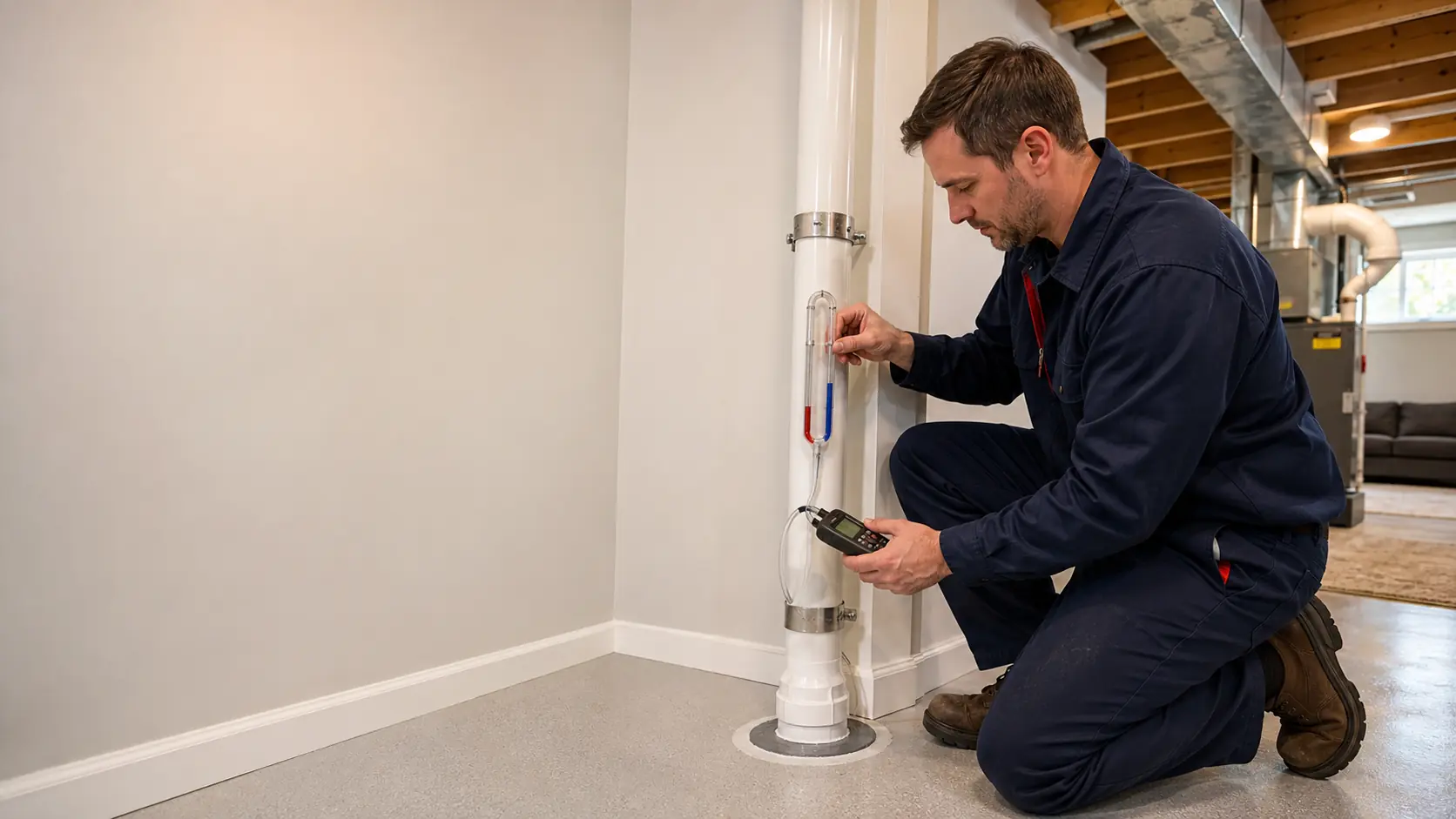
Sub-slab communication, sealing, drainage systems, sump lids, exterior clearances, condensate, electrical work, and the building's operating condition influence system design and appearance. Completion evidence includes labeled piping, sealed penetrations, fan and manometer installation, electrical connection, discharge placement, operating indication, and an appropriate post-mitigation test rather than appearance alone. Sandison explains what was observed, what remains concealed or untested, what can be stabilized now, and what requires additional access or coordination. That prevents an online description, city label, or equipment age from being treated as a remote diagnosis.
Decision and local approval
Birmingham planning connects the supported correction to the right trade path
Suction points, fan capacity, routing, discharge location, monitoring, and sealing are selected from the actual foundation and diagnostic information; similar-looking homes can require different systems. Birmingham maintains building and separate trade applications with online submittal and inspection coordination through its Building Department. The scope should protect finishes, expose concealed assumptions, identify public-versus-private utility responsibility, and document which connected trades are part of the proposed correction. The final recommendation identifies the responsible system, relevant Oakland County service-area context, permit or inspection questions, restoration exposure, and verification step without promising approval, availability, or an outcome before the property is evaluated.
Does Sandison provide radon mitigation in Birmingham?
Yes. Birmingham is in Sandison's Oakland County service area. Project fit, urgency, equipment, and current availability are confirmed when you contact the office.
What affects a radon mitigation recommendation in Birmingham?
The property, symptoms, age and condition of connected systems, access, safety, measurements, and visible evidence all affect the right scope.
Can radon mitigation involve another trade?
Sometimes. Sandison's plumbing, mechanical, and electrical experience helps when a project crosses systems, controls, venting, drainage, power, or equipment requirements.
Evidence and review
Why this page can be trusted
Released from matrix position 4.9 with a relevant municipal source, a primary service reference, distinct local system context, qualified technical review, and no claim that the city label replaces property-specific evidence.
Author and qualified trade reviewer: James Sandison, B.S. Mechanical Engineering, Oakland University. Michigan Mechanical License 7115733 · Michigan Master Plumber 8112263 · Michigan Plumbing Contractor 800-3618. Last reviewed 2026-08-28.